Summary:
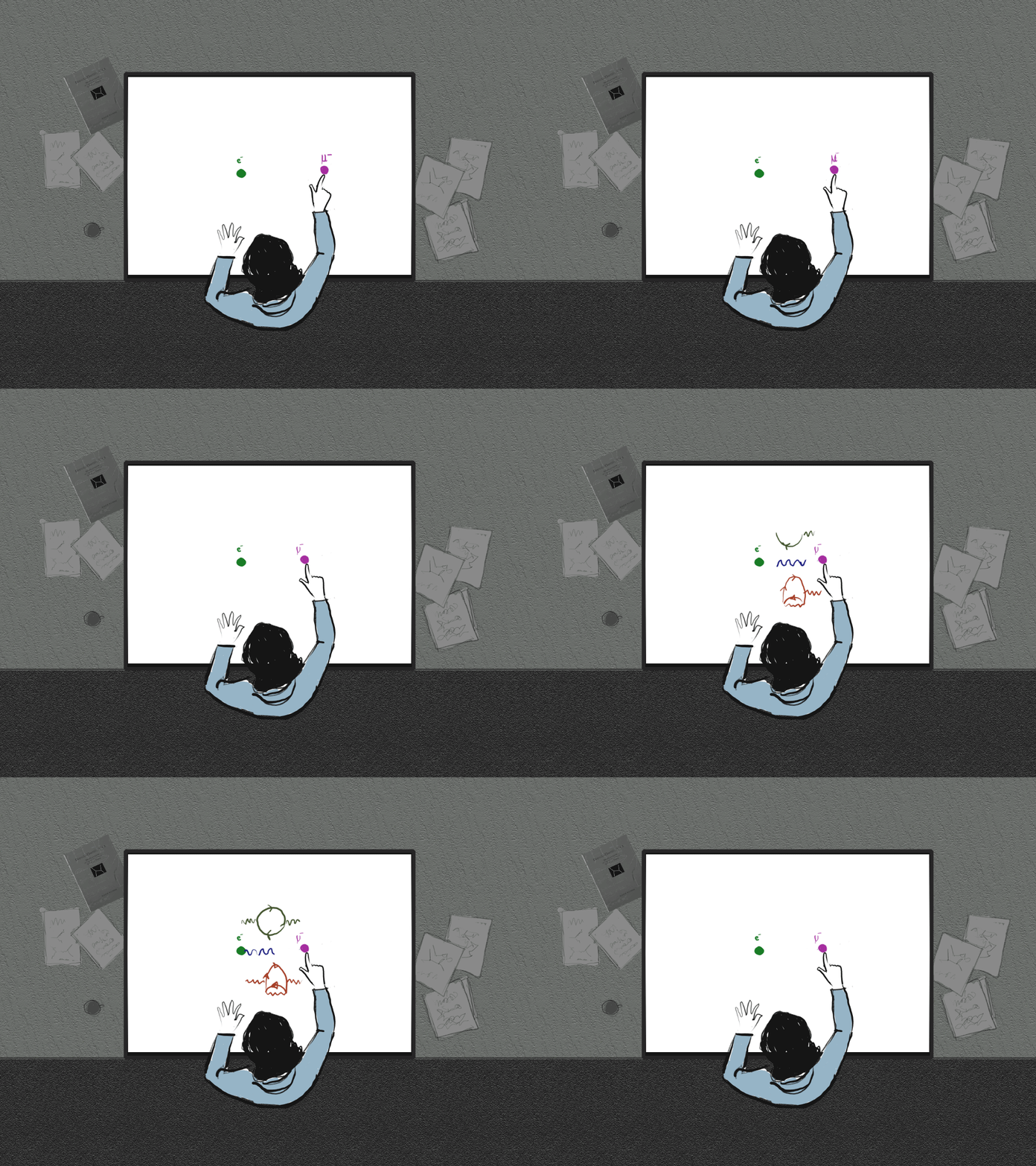
In this design fiction talk, a parallel-universe Dr. Richard Feynman collaborates with an AI system to reimagine “Feynman Diagrams” —tools that revolutionized theoretical physics in the 20th century in our universe. What role might AI play in shaping new forms of representation—be it diagrams, abstractions, or notations? And how might these visualizations appear in a parallel reality? In collaboration with Sangho, Ian, Saquib.
Background:
“How will creators design their own tools in the age of AI”? This question has been on my mind for a while, especially in contexts like animation, where examples such as energy brushes and principles of animation stand out. While preparing for my keynote at Creativity & Cognition conference and UCSD’s Design&Large series, I wanted to explore these ideas through fiction and comics. Around the same time, similar questions emerged in our Dynamic Abstraction group. To bring these concepts to life, I turned to drawing board for a design fiction and collaborated with Sangho, Saquib, and Ian, whose ideas and perspectives greatly enriched this work. The result is a blend of an academic talk, conversation, and design fiction.
Why Feynman Diagram for the design fiction?
To ground our discussion around a specific tool, we chose Feynman diagrams as an example, because it represents a breakthrough in creating new tools—pictorial notations that revolutionized theoretical physics. They offer valuable lessons on innovation, dissemination, limitations, and practical applications. Reflecting on their impact helps us explore the future of creating tools like diagrams, notations, and representations.
The Story
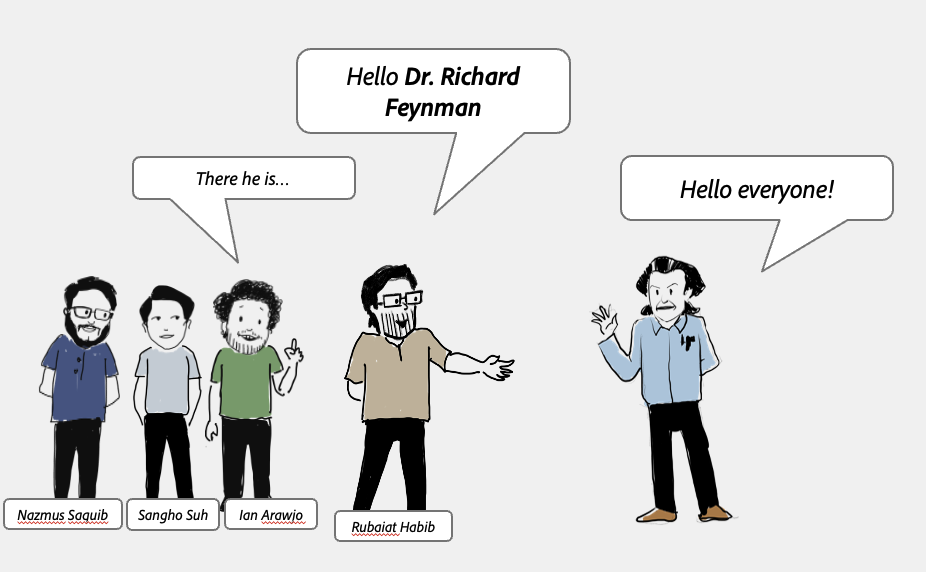
Sangho, Ian, Saquib, and I travelled to a parallel universe to observe Dr. Richard Feynman’s process of creating “Feynman diagrams” with powerful computational tools. We shared our findings in the following three sections.
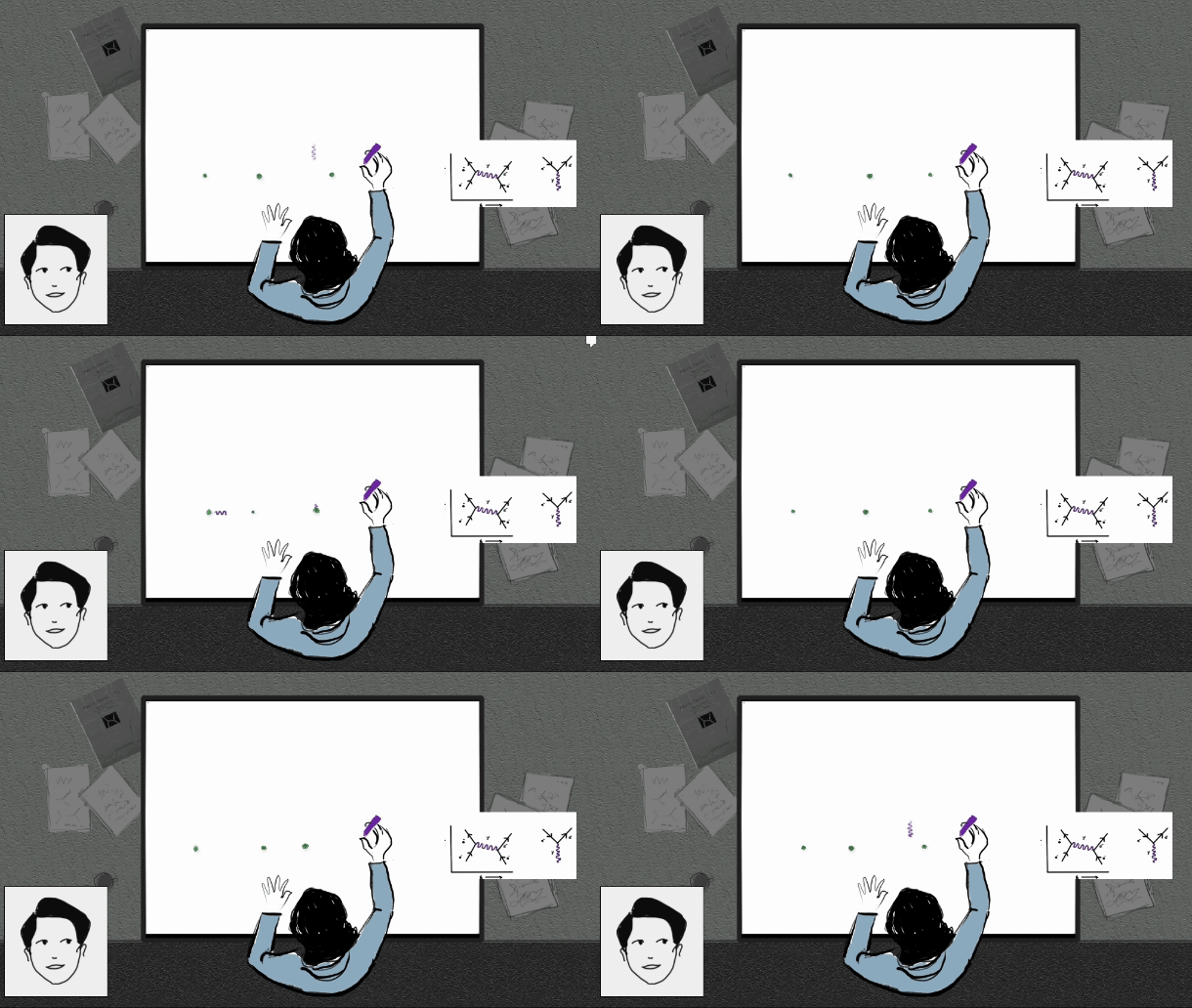
(1) Dynamic
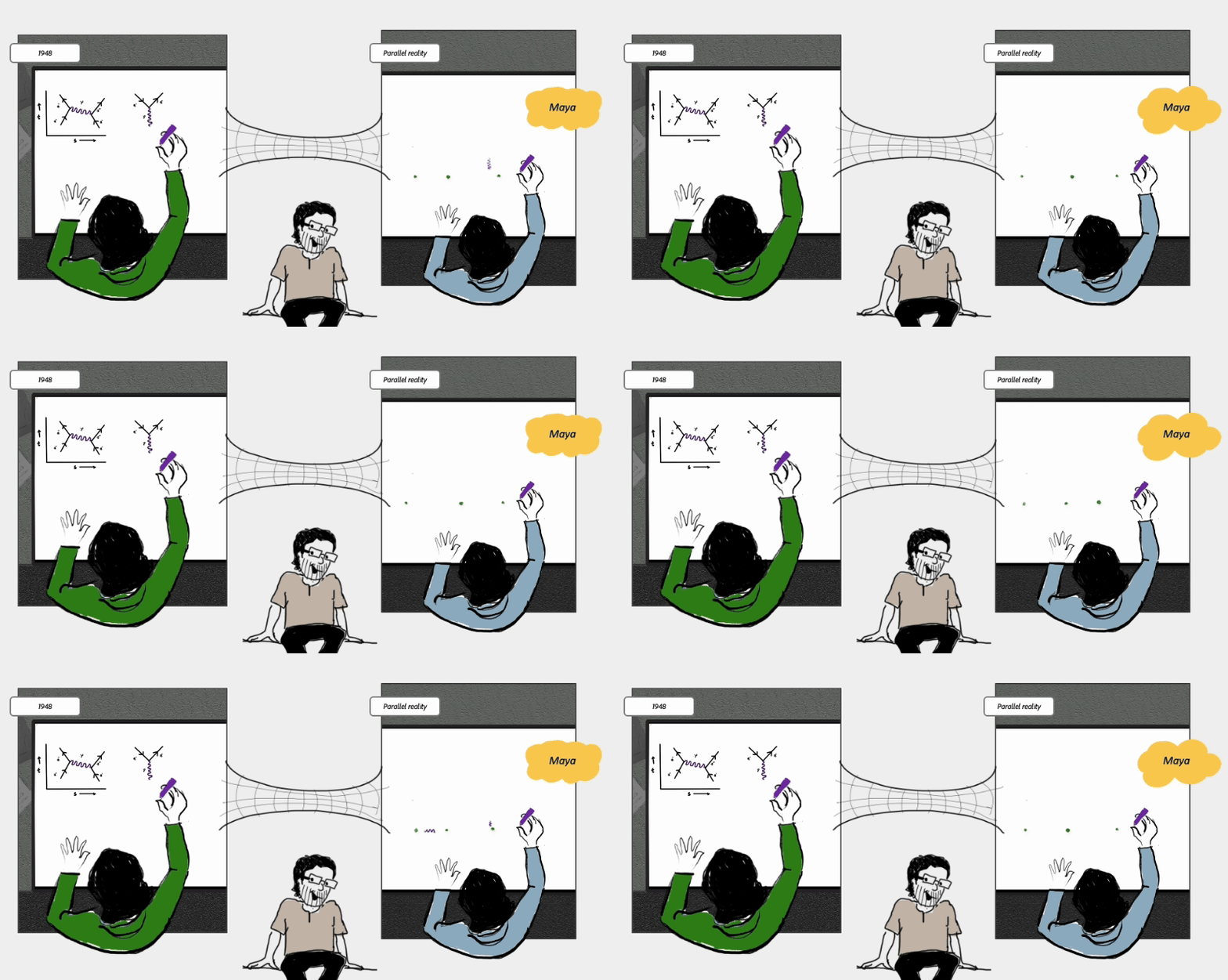
In this parallel universe, Feynman diagrams take the form of dynamic simulations, capturing the dynamic nature of subatomic particle interactions more effectively. Sangho and I discussed the importance of abstraction, and also enabling the creation of simulations and behaviors without programming in light of recent works.
(2) Ladders of Abstraction
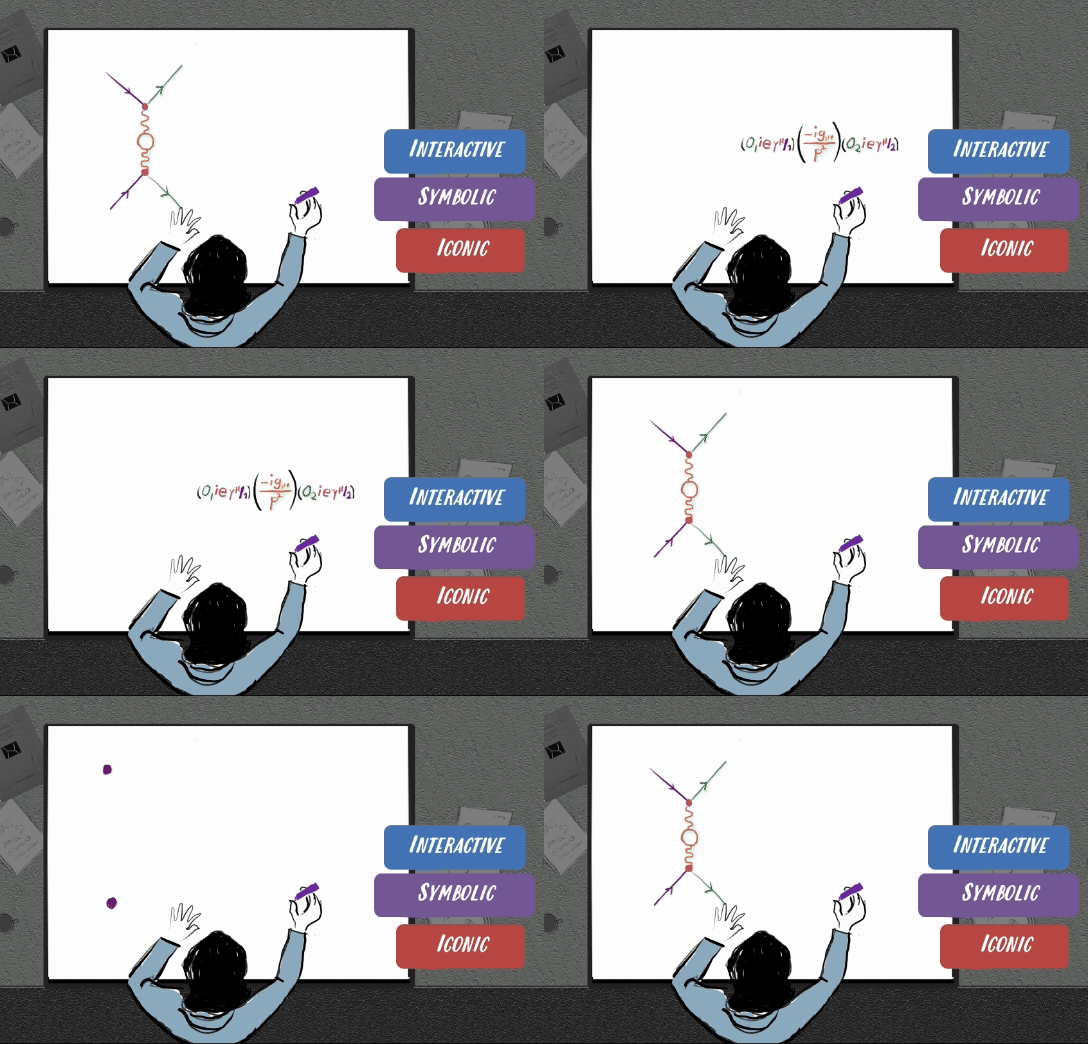
To communicate with his peers, Dr. Feynman establishes mappings between the diagrams and their corresponding mathematical equations. Sangho highlights the challenges of such mappings using ladders of abstraction, while Saquib emphasizes AI’s potential to address inverse problems for bi-directional mapping between pictorial and symbolic representations.

(3): Grounded and Shareable
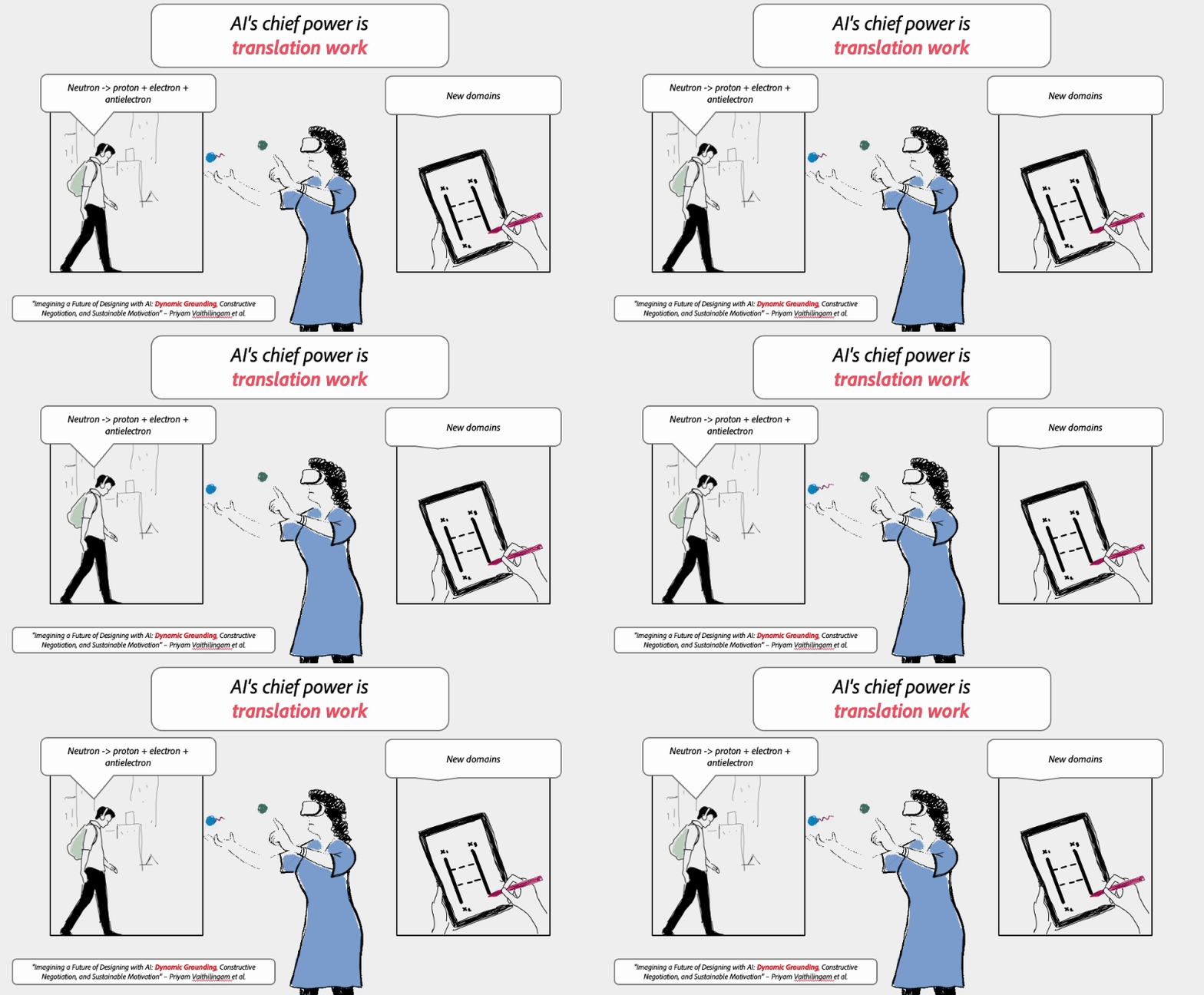
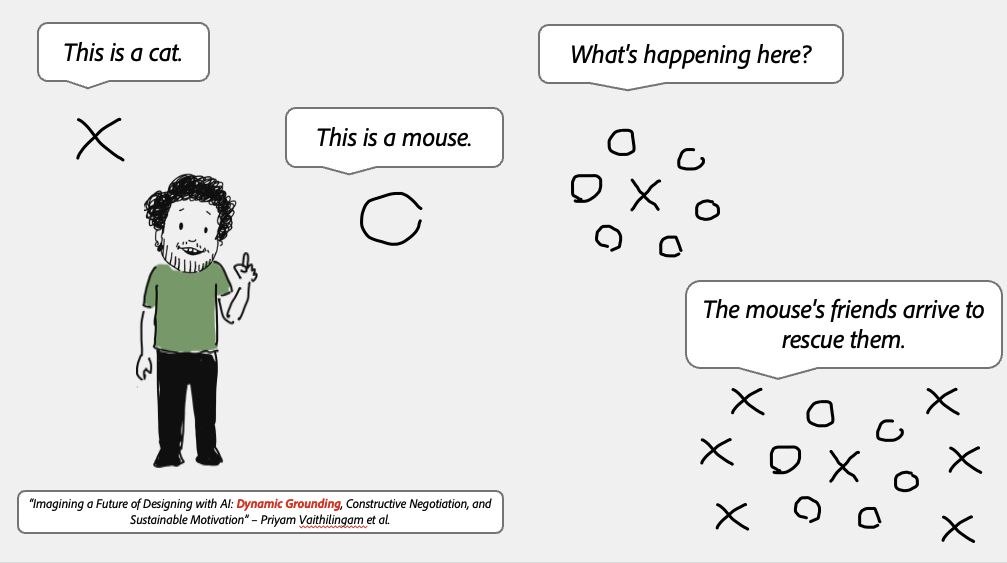
In the final section, we explore how Feynman diagrams are shared and adopted by the broader community in this parallel universe. Ian emphasizes the role of AI in translation, tailoring content to the user’s unique context and situation—a concept he calls ‘dynamic grounding.’
Here is the full talk.
Acknowledgements:
Thanks to Rubab Khan, whose consultation helped crafting the (animated) diagrams
Dynamic Abstraction Group.
 Rubaiat Habib Kazi